
Amygdalin 98%
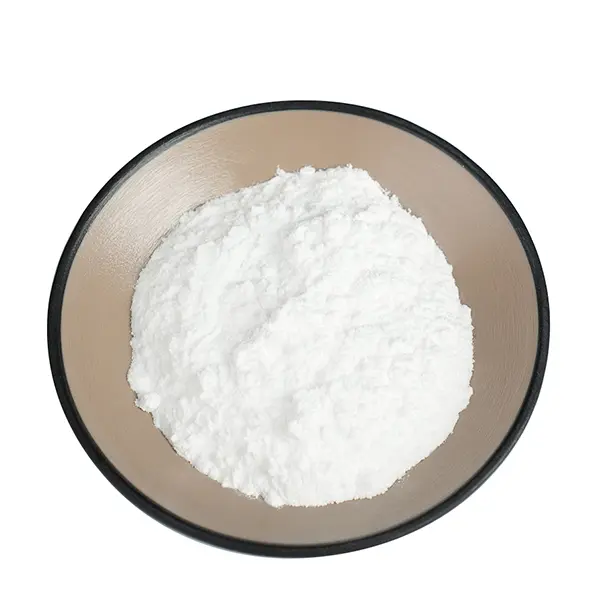
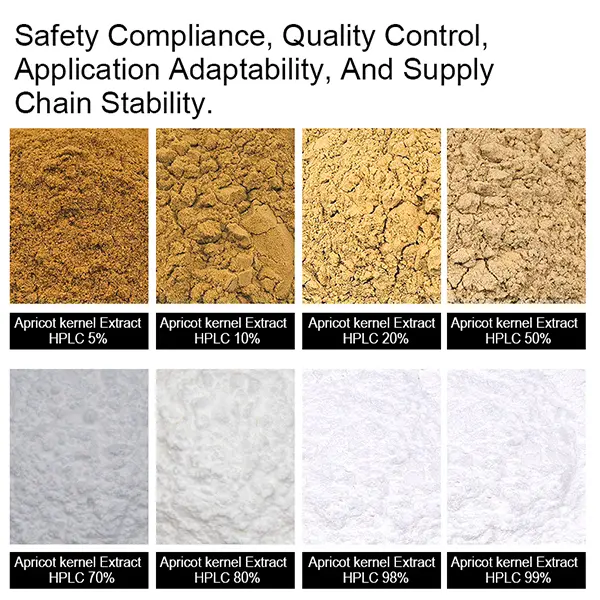
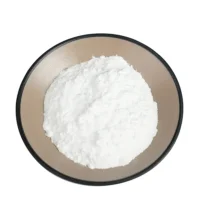
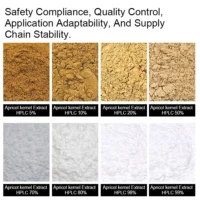
Amygdalin 98%
Latin Name:Amygdalus Communis Vas
Appearance: Brown to off-white fine powder .
Spec: 5%-99%
Testing Methods: HPLC
CAS:29883-15-6
MQO:1KG
Amygdalin 98% Apricot Kernel Extract Powder Manufacturer

Amygdalin Source
Amygdalin is a naturally occurring cyanogenic glycoside, primarily derived from the kernels of wild bitter apricot seeds (Prunus armeniaca L. var. ansu) and other plants of the Rosaceae family. In nature, amygdalin serves as a protective compound in plants and is valued for its stable molecular structure and clear botanical origin.
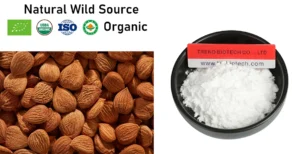
Our amygdalin is sourced from wild, organically grown bitter apricot kernels, harvested from unpolluted natural growing regions. No chemical pesticides, fertilizers, or genetically modified organisms (GMOs) are used during cultivation, ensuring a natural, clean, and traceable raw material source.
After careful manual selection, the raw materials are processed using physical crushing and low-temperature extraction techniques, which help preserve the biological activity and natural integrity of amygdalin. The final product offers high purity, excellent stability, and batch-to-batch consistency, making it suitable for applications in food ingredients, dietary supplements, functional formulations, and research use.
Product Introduction
Amygdalin is a naturally occurring cyanogenic glycoside, primarily derived from the kernels of wild bitter apricot seeds (Prunus armeniaca L. var. ansu) and other plants of the Rosaceae family. In nature, amygdalin serves as a protective compound in plants and is valued for its stable molecular structure and clear botanical origin.
Our amygdalin is sourced from wild, organically grown bitter apricot kernels, harvested from unpolluted natural growing regions. No chemical pesticides, fertilizers, or genetically modified organisms (GMOs) are used during cultivation, ensuring a natural, clean, and traceable raw material source.
After careful manual selection, the raw materials are processed using physical crushing and low-temperature extraction techniques, which help preserve the biological activity and natural integrity of amygdalin. The final product offers high purity, excellent stability, and batch-to-batch consistency, making it suitable for applications in food ingredients, dietary supplements, functional formulations, and research use.
Company Strength
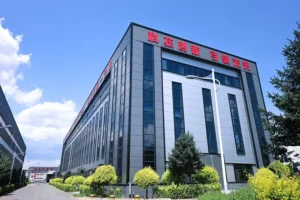
Chengde Trend Biotech Co., Ltd. is one of China’s leading manufacturers of Amygdalin, specializing in large-scale production, process optimization, and quality control of amygdalin.
Supported by a stable supply of wild organic bitter apricot kernels and an advanced manufacturing system, the company has established strong production capacity and reliable global supply capability. Today, Chengde Tianrunda Biotechnology Co., Ltd. is recognized as one of the major amygdalin production bases in China, serving customers worldwide with consistent quality and technical expertise.
Benefits
The potential benefits from vitamin B17, when taken in moderation include a reduction in blood pressure, a boosted immune system, and relief from pain among others.
Apricot kernels and their oil were historically used to treat tumors and ulcers (Rieger, 2006). Amygdalin has been reported to be used for preventing and treating migraine, hypertension, chronic inflammation, and other reaction source diseases and for the treatment of cancer (Toshiyuki et al., 2003). Amygdalin has also been reported to improve cerebral function (Hiromi, 1995).
11111111
Amygdalin was noted in literature to have potential against cancer cells. It has been suggested that amygdalin arrests the G0/G1 phase of cell cycle and cell death is induced by upregulation of pro-apoptotic proteins like Bax and caspase-3 and downregulation of apoptosis inhibitors such as Bcl-2 (Saleem at al., 2018). This same mechanism of action was seen in human cervical cancer HeLa cell lines when amygdalin induced apoptosis in this cell by the same mechanism stated above (Chen et al., 2013).
PRODUCT SPECIFICATION SHEET
| PRODUCT NAME | Amygdalin |
| PRODUCT CODE | TRD-XRTQ-2501-01 |
| LATIN NAME | Prunus armeniaca |
| USE PART | China |
| FREE SAMPLE | 100g |
| ORIGIN | China |
| PHYSICAL / CHEMICAL/ MICROBIOLOGICAL | |
| APPEARANCE | Fine powder |
| COLOR | Off white |
| TASTE & ODOR | Characteristic |
| TOTAL DIETARY FIBER(G/100G) | ≤ 7.0 |
| TOTAL FAT (G/100G) | ≤ 5.0 |
| GLUTEN | < 20ppm |
| SOYA PROTEIN | < 20ppm |
| PROTIEN(DRY BASISI)(NX6.25)% | ≥80% |
| MOISTURE (%) | ≤ 8 |
| PH (% IN WATER) | 5.5-7.0 |
| ASH (%) | ≤8.0 |
| MELAMINE | Not detected |
| HEAVY METAL | Pb<0.2mg/kg
As<.0.2 mg/kg Cd<0.2 mg/kg Hg<0.1 mg/kg |
| PESTICIDE RESIDUE | Meet USDA Organic standard |
| MICROBIOLOGICAL | |
| TPC (CFU/GM) | <1000cfu/g |
| MOULD & YEAST | < 50cfu/g |
| ENTEROBACTERACAE | <10 cfu/g |
| ESCHERICHIA MPN/G | Negative |
| STAPHYLOCOCCUS | Negative |
| SALMONELLA: | Negative |
| LISTERIA MONOCYTOGENES | Negative |
| STORAGE | Cool, Ventilate & Dry |
| PACKAGE | 25 KG/ DRUM |
| SHELF LIFE | 24Months |
Flow chart

Safety & Certifications
Certifications: Complies with ISO, Halal, and Kosher standards (varies by supplier) .
Adverse Effects: No significant toxicity reported; excessive intake may cause mild gastrointestinal discomfort .
Packing & Storage
1.Packing : 20kg/25kg/Drum or Carton, 5kg/aluminum Foil Bag inside.
2.Volume : 0.063m³ per package.
3.Storage : Stored in a cool, dry and dark place.
4.shelf life : 24 months.
5.Lead Time:7-10days.
6.Remark: Customized specifications also can be achieved.